


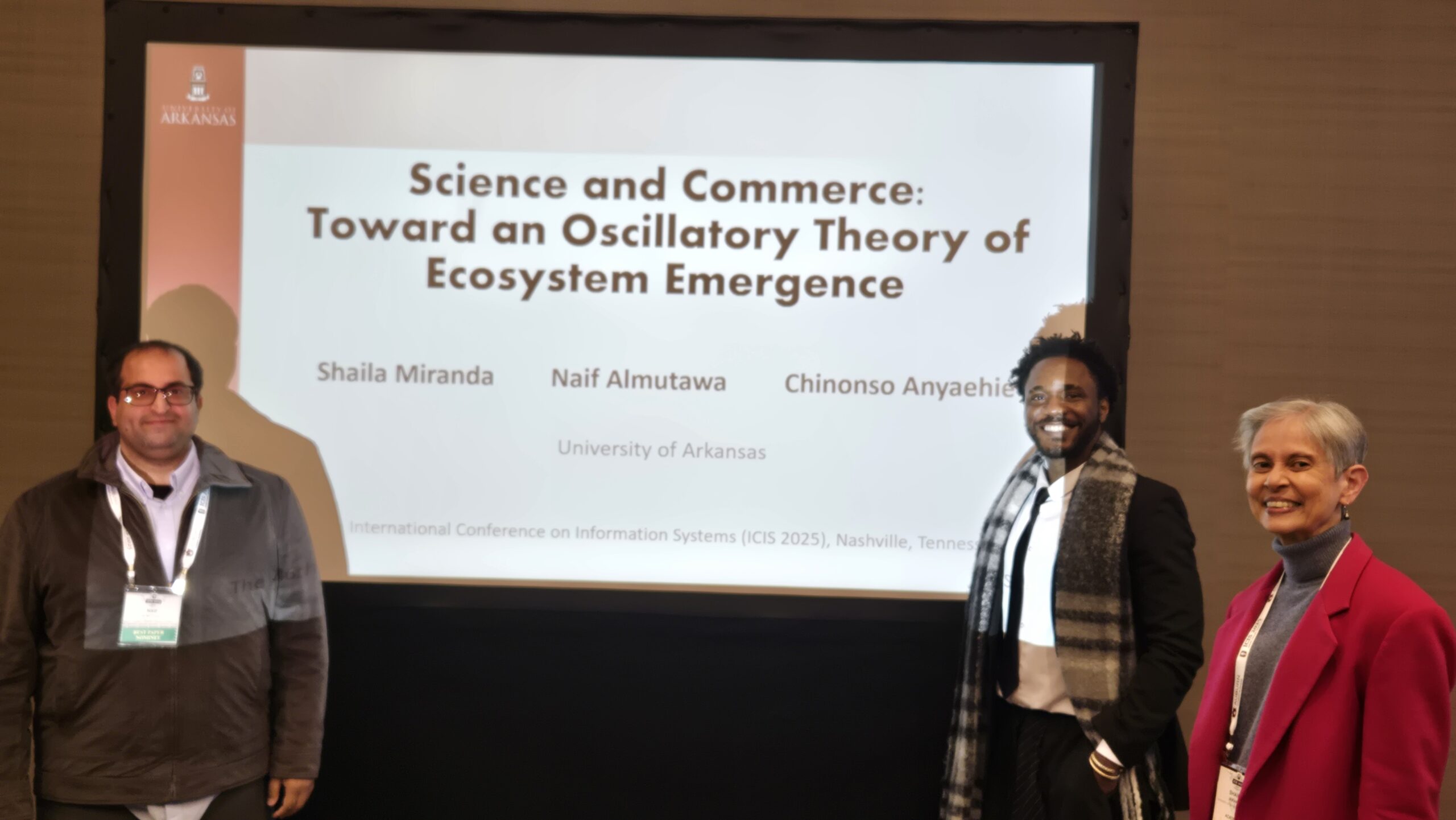
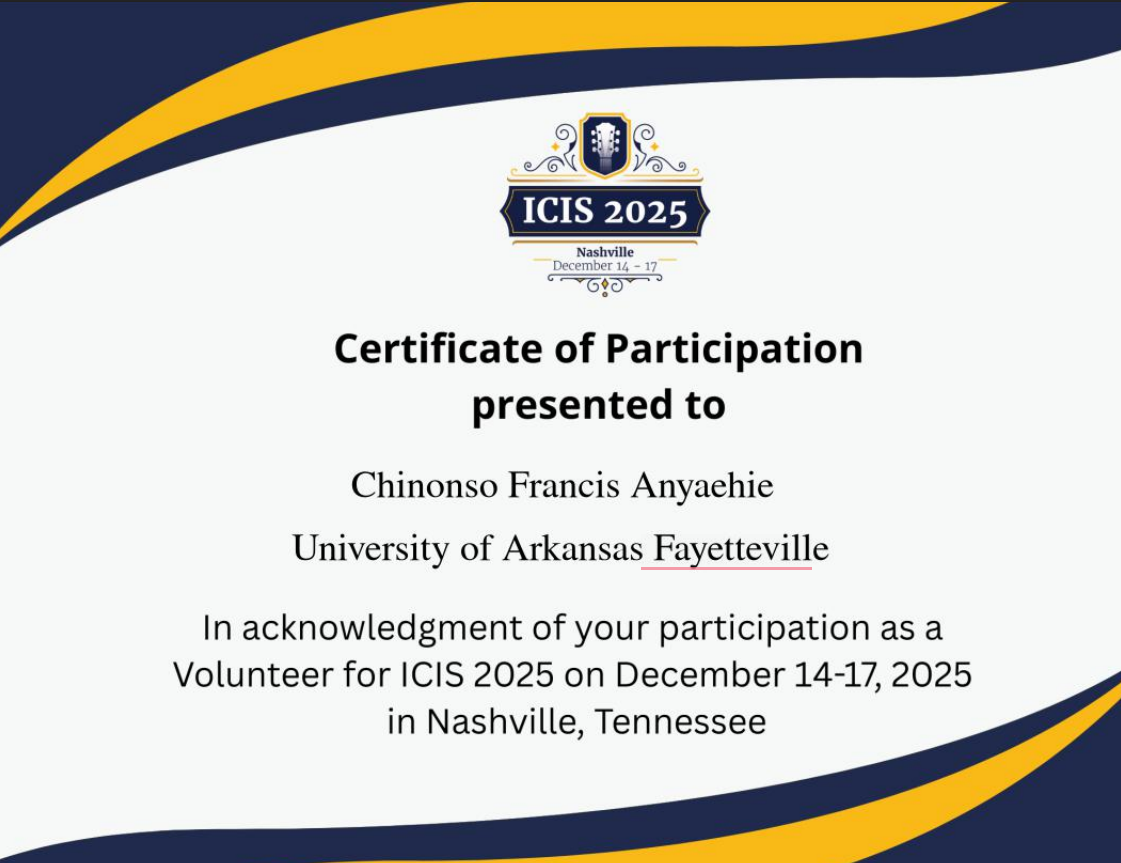
At ICIS 2025 (International Conference on Information Systems), I had the privilege of presenting our paper,
“Science and Commerce in Quantum Computing: Toward an Oscillatory Theory of Ecosystem Emergence,”
which was honored with the Best Paper Award.
This work was co-authored with Shaila M. Miranda and Naif Almutawa, both from the University of Arkansas. Receiving the Best Paper Award was not only a significant milestone for us as a team, but also a strong signal that the Information Systems community is ready to engage deeply with quantum computing as a core socio-technical phenomenon.
This article reflects on the motivation behind the study, the approach we took, the theory we developed, and why this work matters for the future of Information Systems research.
Why Study Quantum Computing as an Ecosystem?
Quantum computing has moved from abstract theory to an impending technological reality. Yet, despite growing attention, much of the existing discussion remains fragmented. Technical advances are often separated from organizational dynamics, and commercial breakthroughs are frequently discussed without sufficient attention to the scientific institutions that made them possible.
Emerging technologies rarely develop in isolation. They evolve through innovation ecosystems, complex arrangements of organizations, institutions, and actors that collectively shape technological trajectories. While prior research has acknowledged the value of ecosystem perspectives, we still know relatively little about how such ecosystems emerge and evolve over time, especially when both scientific and commercial organizations play central roles.
Quantum computing presents a particularly compelling context. Its development spans decades, continents, and organizational forms, involving universities, national laboratories, startups, and global technology firms. Rather than following a clean, linear path from lab to market, quantum computing appears to advance through shifting waves of influence.
This observation motivated our central research question:
How does a complex, geographically dispersed innovation ecosystem emerge and evolve, particularly with respect to the roles of scientific and commercial organizations?
A Computational Theory Construction Approach
To address this question, we adopted a computational theory construction approach, which allows researchers to study long-term, large-scale phenomena in ways that are difficult to achieve through traditional methods alone.
Our empirical foundation consisted of 4,194 press releases related to quantum computing, spanning from 1989 through February 2025. These texts capture how organizations publicly frame their activities, priorities, and identities over time. Importantly, press releases are not neutral artifacts. They are strategic signals that reflect how actors position themselves within an evolving ecosystem.
We analyzed both the structure and the content of this discourse across four historical time brackets. This enabled us to trace shifts in emphasis, influence, and narrative dominance between scientific and commercial organizations over time.
Rather than beginning with a predefined theoretical model, we allowed patterns in the data to guide theory development. This data-driven approach enabled us to surface macro-level dynamics that are often invisible in smaller-scale qualitative studies.
An Oscillatory Theory of Ecosystem Emergence
The central theoretical contribution of the paper is what we call an oscillatory theory of ecosystem emergence.
Our findings challenge linear or stage-based models of innovation. Instead, we show that the quantum computing ecosystem evolves through recurring cycles of dominance between science and commerce.
At certain periods, scientific organizations such as universities and research institutes take the lead, emphasizing exploration, foundational research, and theoretical advancement. At other periods, commercial organizations such as startups and technology incumbents rise in prominence, focusing on application, scaling, and market positioning.
These shifts are not random. They follow a patterned rhythm in which scientific and commercial actors alternately shape the ecosystem, each enabling and constraining the other. Scientific breakthroughs create new commercial opportunities, while commercial investments and strategic interests reshape scientific agendas.
This oscillatory dynamic helps explain why quantum computing has progressed in waves rather than through steady, linear advancement.
Why This Matters for Information Systems Research
Winning the Best Paper Award at ICIS 2025 reinforced how well positioned the Information Systems field is to study technologies like quantum computing.
IS research has long emphasized socio-technical systems, recognizing that technologies cannot be understood independently of the organizational, institutional, and social contexts in which they are embedded. Quantum computing represents a new frontier where this perspective is essential.
This study contributes to Information Systems research in several important ways. First, it introduces a novel theoretical lens for understanding ecosystem emergence that moves beyond static or linear models. Second, it demonstrates the value of computational approaches for theory construction, particularly when studying long time horizons and complex innovation dynamics. Third, it positions quantum computing as a legitimate and necessary topic for mainstream IS scholarship, not merely as a technical curiosity, but as an organizational and strategic phenomenon.
Presenting at ICIS and Scholarly Dialogue
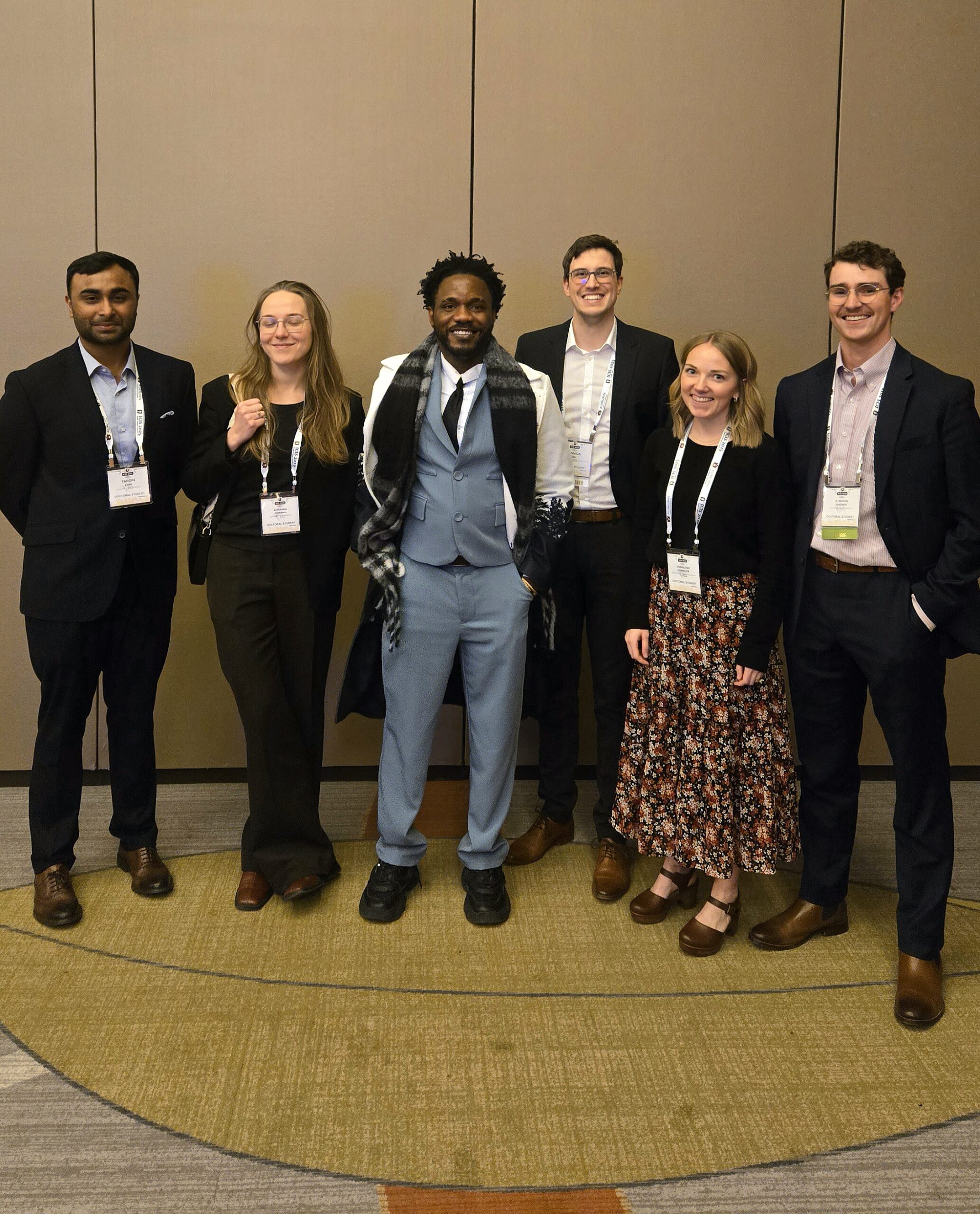
Presenting this work at ICIS 2025 was especially rewarding because of the depth and quality of scholarly engagement it generated. The questions and feedback reflected a growing recognition that emerging technologies must be studied not only for what they can do, but for how they reshape organizations, ecosystems, and fields of practice.
Many conversations moved beyond introductory discussions of quantum computing and instead focused on how such technologies should be theorized responsibly, how ecosystems evolve over time, and how IS scholars can contribute meaningfully to debates often dominated by technical disciplines.
These exchanges affirmed the importance of building theory that is both methodologically rigorous and contextually grounded.
Looking Ahead
Quantum computing continues to evolve, and so does the ecosystem surrounding it. The oscillatory theory we propose is not an endpoint, but a foundation for future research. Subsequent studies can examine other emerging technologies, compare ecosystem dynamics across domains, or explore how policy, regulation, and geopolitics interact with scientific and commercial forces.
For us as authors, presenting this work and receiving the Best Paper Award at ICIS 2025 was not just a moment of recognition. It was a reaffirmation of the role Information Systems research can play in shaping how emerging technologies are understood, governed, and developed.
Authors
- Shaila M. Miranda, University of Arkansas
- Naif Almutawa, University of Arkansas
- Chinonso Francis Anyaehie, University of Arkansas



Leave a Reply